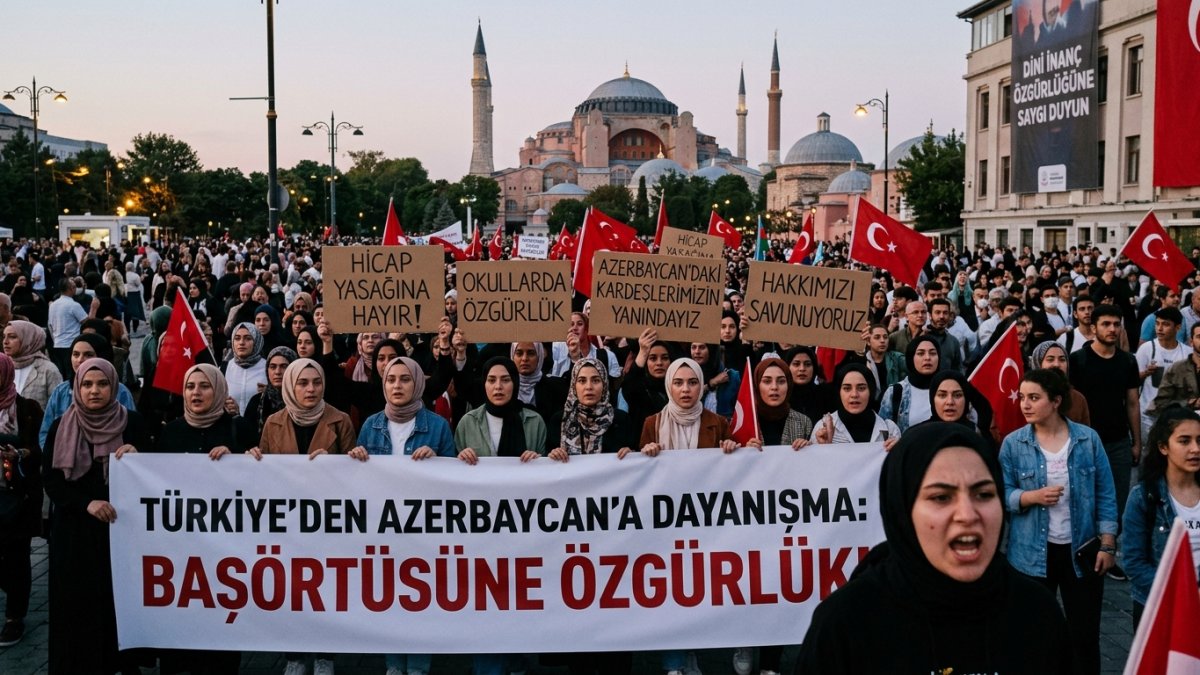
Azerbaijan’s updated school clothing rules have triggered protests and renewed debate about religious dress in public education. The government says the changes are intended to preserve uniformity and the secular character of state schools. The revised language does not name the hijab, but some families say girls wearing Islamic headscarves have been prevented from entering classrooms.
Why the rule is controversial
The dispute has drawn attention in Turkey, where women recall earlier restrictions on headscarves in schools, universities and public institutions. Those memories have helped turn a local dress-code dispute into a wider argument about religious freedom, secularism and the right to education.
The rule’s wording focuses on clothing that conflicts with the prescribed uniform or the secular nature of education. Critics say that, regardless of how the provision is written, its effect is to exclude hijab-wearing pupils. Protests and school boycotts have been reported as families seek clarity from authorities.
A political dispute between neighbours
The issue has also strained public debate between Baku and Ankara. Azerbaijan’s ruling party has accused Turkey’s governing party of using the controversy to interfere in its domestic affairs, while critics in Turkey have condemned the restrictions.
The central question remains whether schools can enforce a common dress code without denying students access to classes because of religious clothing. Officials have defended secular education, while families and rights advocates say the policy should not become a barrier to schooling.