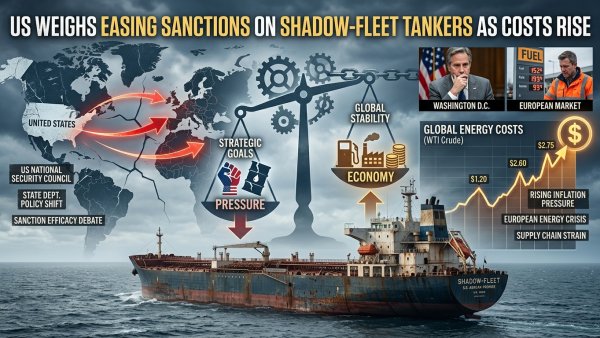

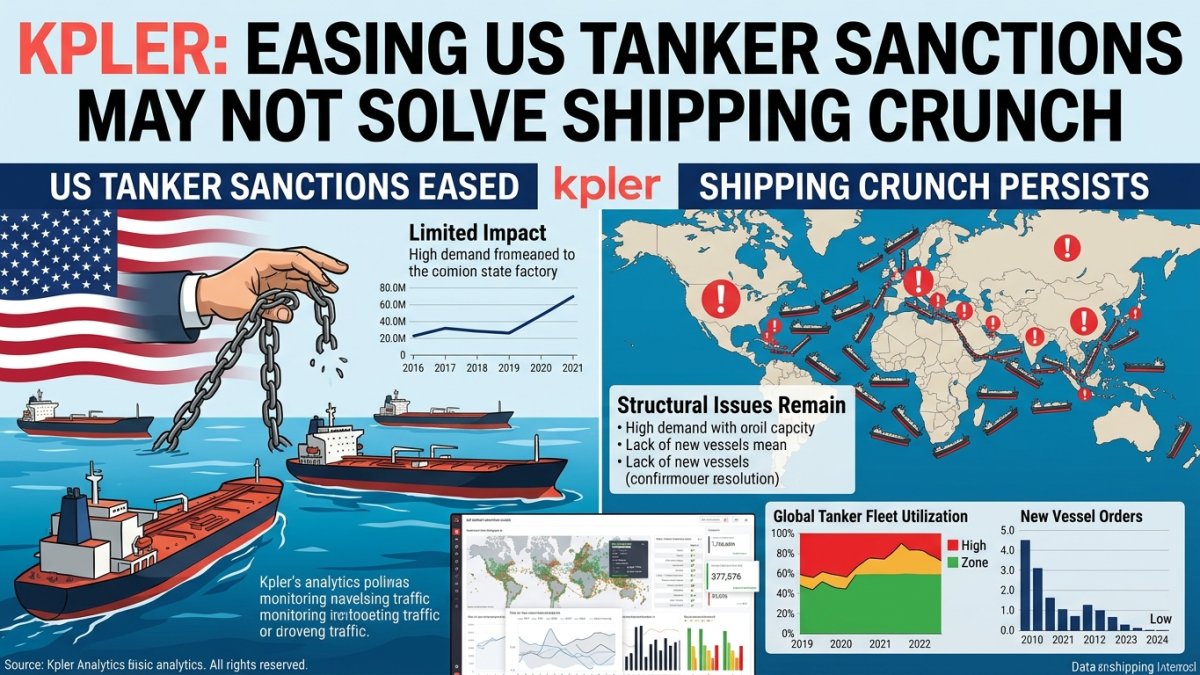
A possible easing of US sanctions on some shadow-fleet tankers is unlikely to quickly relieve the global shipping crunch, according to analysis from maritime data firm Kpler. The company said that removing sanctions alone would not make many vessels suitable or commercially attractive for mainstream trade.
Kpler tracks about 160 very large crude carriers under sanctions imposed by the US Office of Foreign Assets Control. After accounting for vessel age and ownership restrictions, only about 24 could potentially return to wider commercial service, the firm said. Many shadow-fleet ships also face restrictions from other governments or lack the certification, insurance, maintenance and management arrangements required by conventional operators.
The tanker market has tightened as freight rates and war-risk insurance costs rise. Attacks and disruptions around the Strait of Hormuz have made voyages more complicated and reduced the availability of vessels willing to operate in the region. Those factors can keep shipping costs high even if some sanctions are relaxed.
Kpler’s assessment challenges the assumption that a larger pool of ships would automatically translate into more usable capacity. Older vessels may be technically available but remain difficult to insure, crew, certify or charter. Tankers associated with Russian or Iranian oil may also continue to face separate sanctions and legal exposure.
The US proposal has been discussed as one possible way to ease fuel-price pressure, but its practical effect would depend on which vessels are covered and whether operators can meet commercial and safety requirements. For now, analysts say war risk and operational constraints remain central to the tanker crisis.