
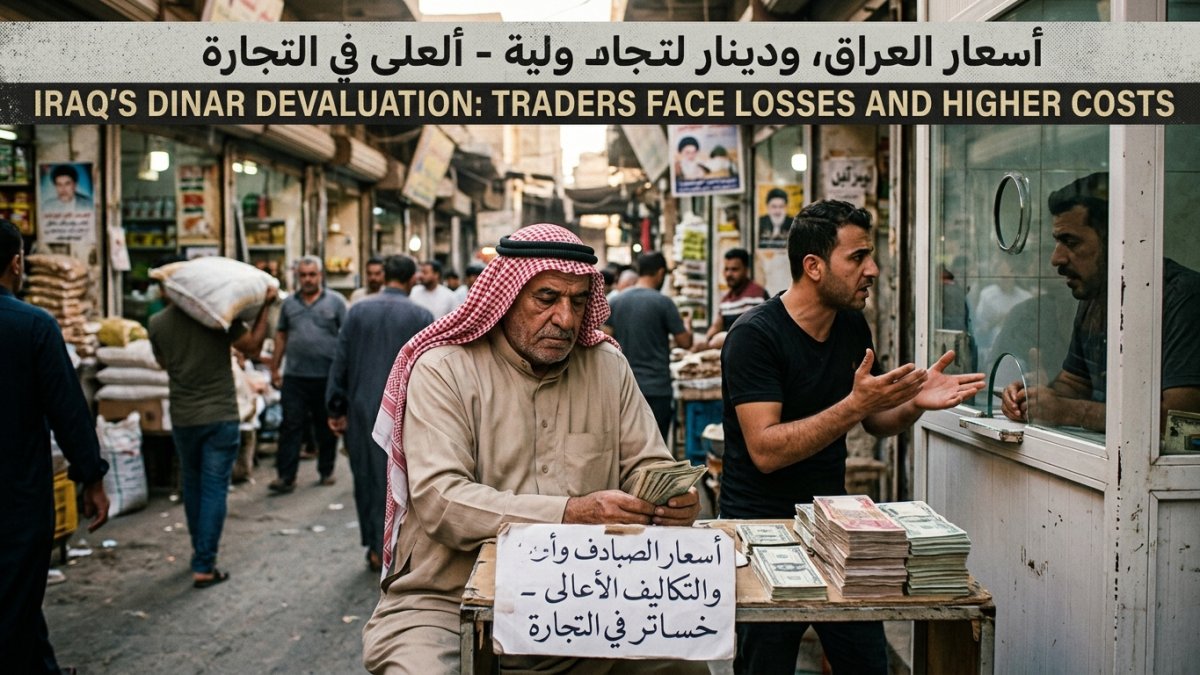
Iraq’s decision to weaken the dinar against the US dollar has left traders uncertain about prices and the value of goods already in stock. The Central Bank set the public cash exchange rate at 1,520 dinars per dollar, compared with 1,320 previously, a devaluation of nearly 15 percent.
The government says the move will help manage a severe cash squeeze and cover public spending, including monthly salaries. A weaker dinar gives Baghdad more local currency for each dollar it earns from oil exports. Those revenues have been strained by disruption to oil shipments through the Strait of Hormuz.
Importers face immediate pressure
Many Iraqi wholesalers buy goods in dollars but sell them domestically in dinars. A lower dinar value means they need more local currency to replace imported stock, while sudden exchange-rate changes make it difficult to set prices. Some traders have paused purchases and sales while they wait for the market to settle.
One Baghdad wholesaler said the change sharply reduced the dollar value of the dinars he held and left him short of funds to buy imported goods. Other merchants also reported losses, while consumers fear that higher import costs will push up prices.
The policy is intended to support the government’s budget, but economists warn that changing the exchange rate alone cannot solve Iraq’s deeper dependence on oil or its shortage of hard-currency income.