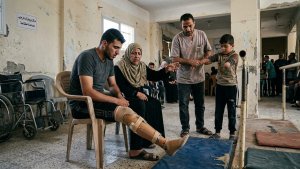
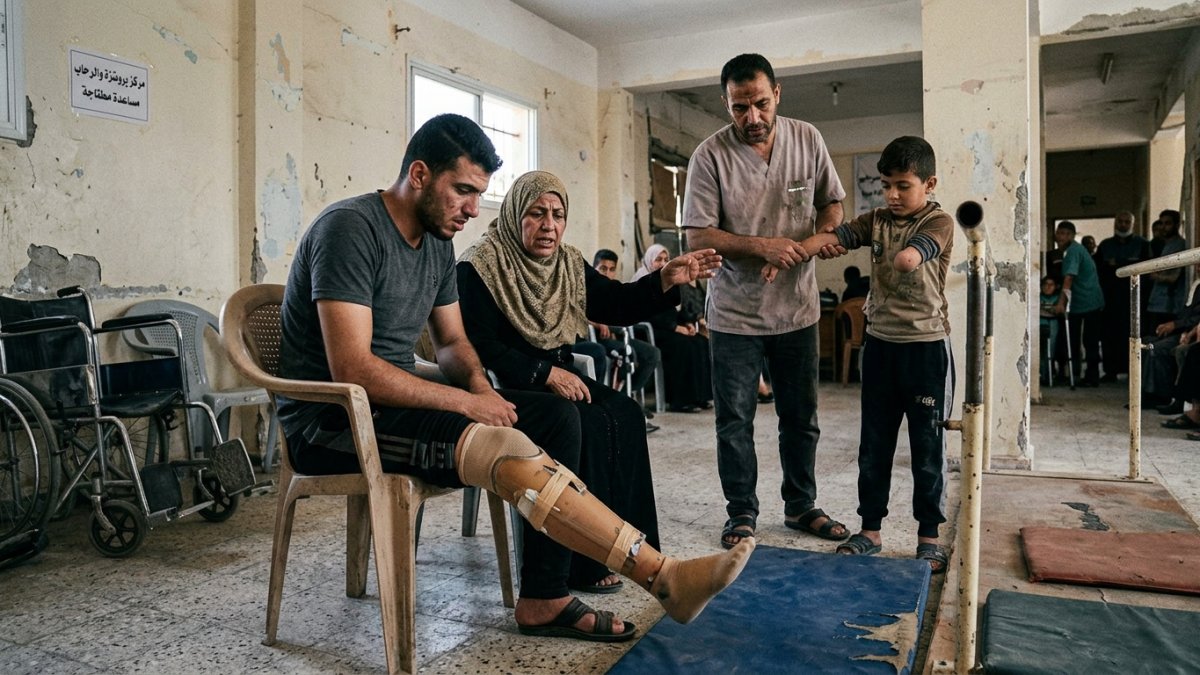
For Gaza’s amputees, surviving an injury is only the beginning of a long and difficult recovery. Many people who have lost limbs still need surgery, prosthetic fittings, physiotherapy and regular follow-up care—services that remain difficult to access across the territory.
One of them is Omar Halawa, a child who lost a limb after being injured while fetching water with relatives. He has described how his daily life changed after the injury, saying that activities he once managed are now beyond his reach.
His experience reflects a wider rehabilitation crisis. A World Health Organization assessment published in May estimated that more than 5,000 limb amputations had taken place in Gaza since October 2023. The same assessment identified tens of thousands of people with serious injuries who may need continuing rehabilitation.
Prosthetic care requires more than an artificial limb. Specialists must assess each patient, prepare the remaining limb, fit and adjust the device, and provide physiotherapy so the person can learn to use it safely. Children may also need repeated adjustments as they grow.
Medical organisations have reported shortages of prosthetic components, rehabilitation equipment and other supplies. United Nations humanitarian reporting has also documented restrictions on some assistive devices and materials requested for Gaza. When supplies and specialist services are unavailable, patients can face prolonged waits and limited options for regaining mobility.
The shortage affects more than movement. Access to rehabilitation can shape whether a person can return to school, work, care for family members or move independently through damaged streets and crowded displacement sites.
Health workers and aid organisations say sustained access to medical supplies, trained specialists and rehabilitation services is essential. For Gaza’s amputees, recovery depends not only on emergency treatment but also on the continued care and equipment needed to rebuild daily life.