
US-Venezuela Oil Deal: What It Means for Venezuela, America and Global Energy
A major new oil agreement between Washington and Caracas could reshape Venezuela’s energy industry and deepen US influence over the country’s vast petroleum resources.
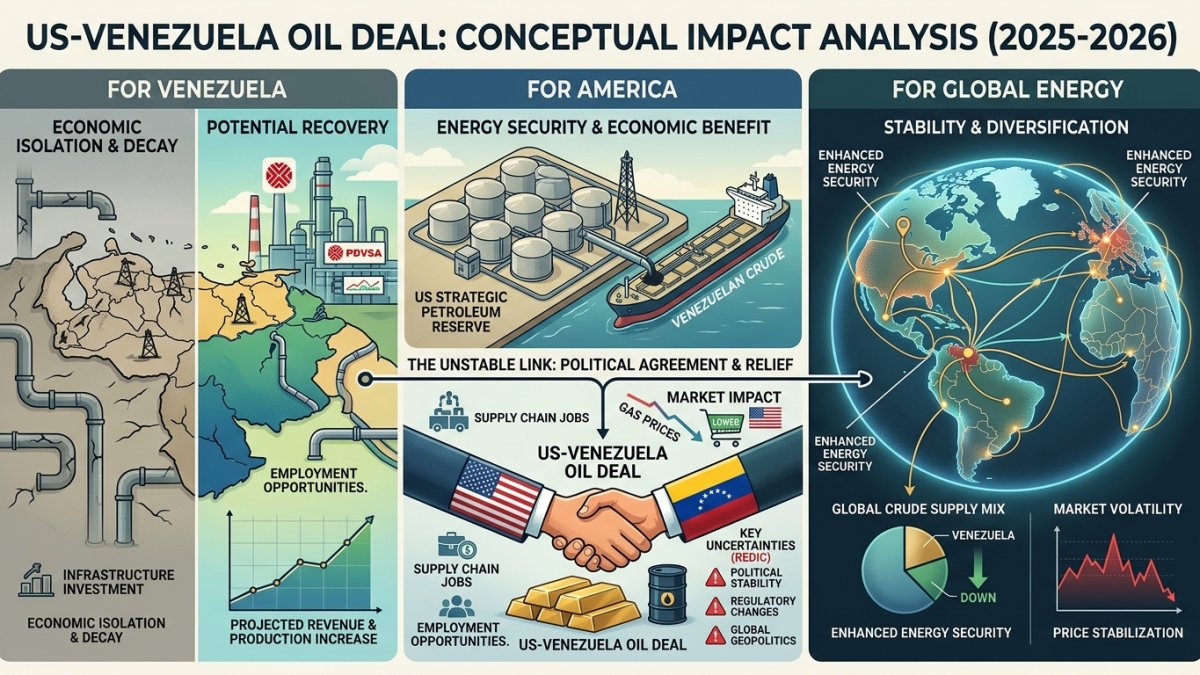
The deal would give US companies access to more than a fifth of Venezuela’s proven oil reserves and is intended to attract large-scale investment, increase production and help rebuild an industry weakened by years of underinvestment and deteriorating infrastructure. Reuters reports that the plan covers 17 oilfields and could eventually raise Venezuelan production to around 1.5 million barrels per day.
Venezuela’s interim President Delcy Rodríguez has defended the agreement, arguing that foreign investment and technology could help revive the economy while the country retains ownership of its natural resources. However, the deal has faced opposition from across Venezuela’s political spectrum, with critics questioning its transparency and whether it complies with Venezuelan law.
Legal experts have also raised concerns because the agreement reportedly bypassed competitive bidding and was negotiated without full public disclosure. The precise financial and ownership arrangements remain unclear.
For the United States, the agreement could provide greater access to Venezuelan crude and strengthen energy security. But experts caution that the deal is unlikely to bring immediate benefits to US consumers because Venezuela’s oil infrastructure requires substantial investment and production increases will take time.
The agreement could therefore become a major test of Venezuela’s economic recovery, US energy strategy and the legal limits of Washington’s influence over the country’s oil industry.