
Why Organised Crime Is Rising in Palestinian Communities in Israel
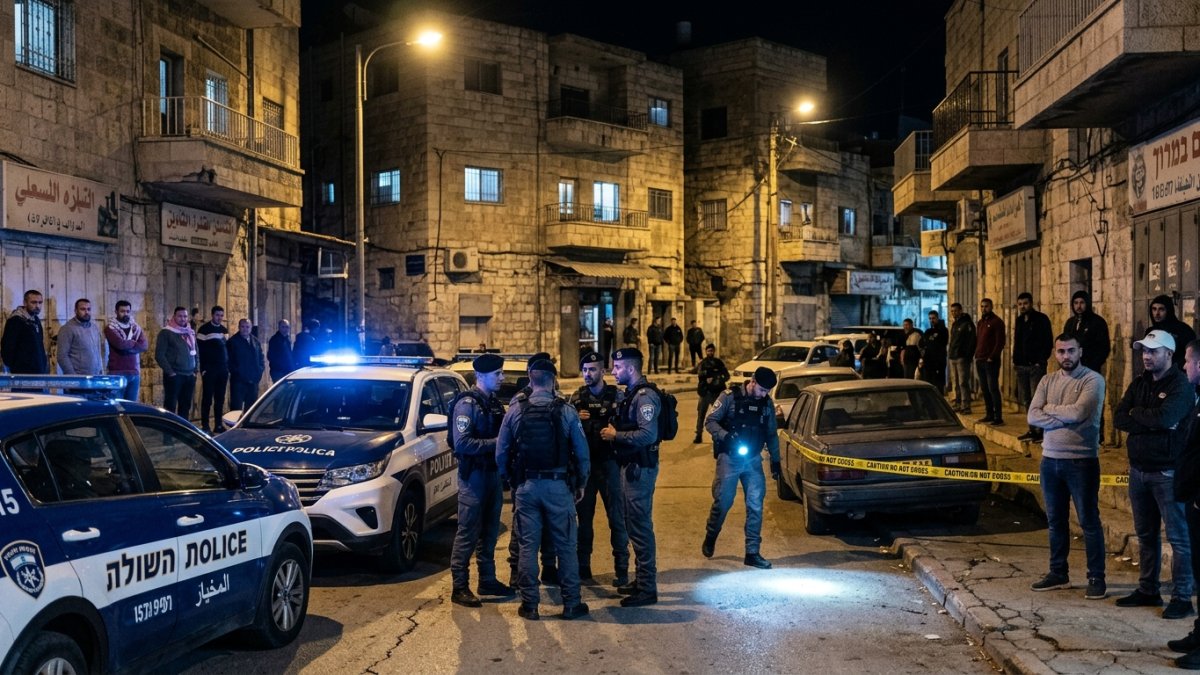
Organised crime has become a major political and social crisis in Palestinian communities inside Israel, with rising murders, widespread illegal weapons and growing allegations of weak policing and state protection.
The problem intensified from the mid-2010s, after several powerful Jewish criminal organisations were weakened by major government crackdowns. Criminal networks increasingly expanded into Palestinian towns and villages, where they found socioeconomic inequality, limited investment, weak local institutions and large numbers of illegal weapons.
The scale of violence has risen sharply. Murders in Palestinian communities increased from 58 in 2015 to about 230 in 2024 and 254 in 2025. Palestinian citizens make up roughly 20 percent of Israel's population, yet they accounted for more than four out of five murder victims in 2025.
Low clearance rates have further intensified criticism. Only around 15–18 percent of murders in Palestinian communities were reportedly solved in 2024, compared with more than half in Jewish Israeli society.
Criminal organisations have also moved beyond drugs, extortion, weapons trafficking and protection rackets. They are increasingly accused of attempting to influence municipal elections, public tenders and local government contracts, including sectors such as construction, waste management and transportation.
Economic inequality is another major factor. Poverty, unemployment, limited educational opportunities and underinvestment in Arab communities can create conditions in which criminal groups offer money, employment and access to resources that legitimate institutions fail to provide.
The crisis has triggered large protests by Palestinian citizens demanding stronger state action. Israel has also moved towards involving the Shin Bet security agency in fighting organised crime, a decision that has raised concerns among Palestinian leaders and civil society groups about treating a civilian crime problem as a national-security issue.
Ultimately, the crisis goes beyond policing. Critics argue that dismantling criminal networks must be accompanied by greater investment, stronger local institutions, economic opportunities and equal protection under the law.