
Repeated Houthi missile and drone attacks on Riyadh have raised questions about why Saudi Arabia’s air-defence network has not stopped every incoming weapon. Analysts say the breaches do not, on their own, prove that the kingdom’s systems have failed across the board. Several practical and operational pressures may be involved.
A large area to protect
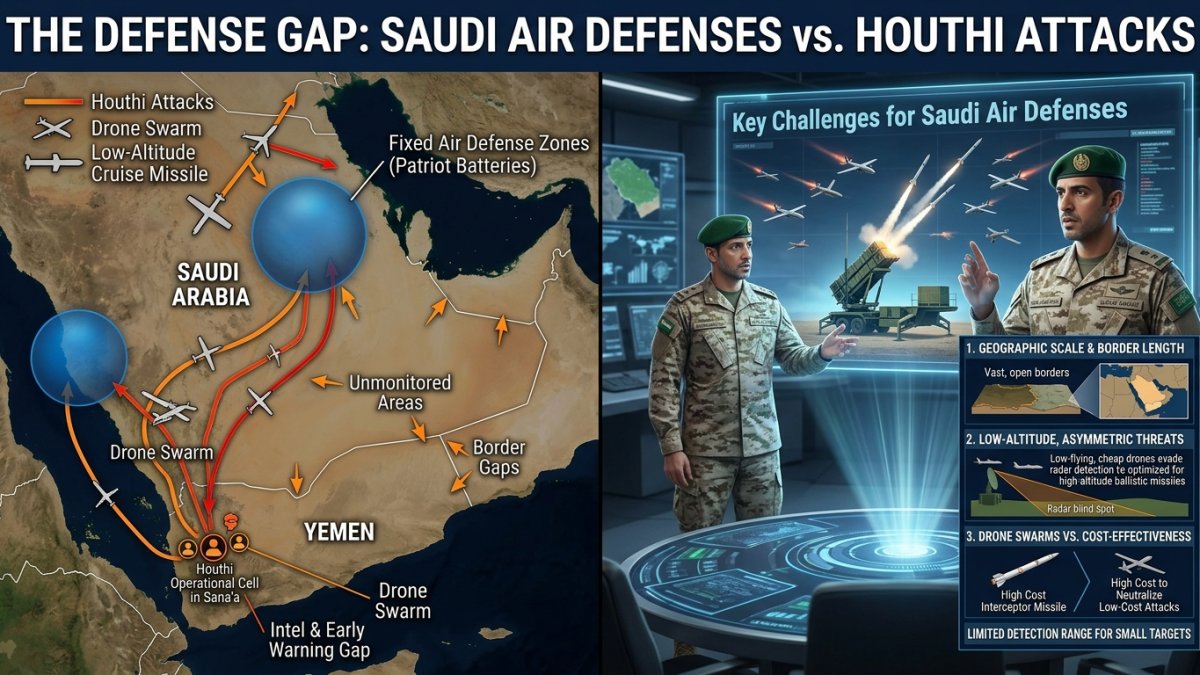
Saudi Arabia has invested in advanced systems, including Patriot interceptors and the THAAD missile-defence system, as well as fighter aircraft capable of engaging some slower threats. But the country’s territory is vast, and critical airports, military installations and energy sites are spread across long distances. Maintaining sensors and early-warning coverage over desert areas is costly and demanding.
Different weapons create different challenges
The Houthis have used ballistic missiles, cruise missiles and one-way attack drones. A coordinated barrage involving several weapon types can complicate detection and force commanders to decide which threats to engage with limited time and ammunition.
Stock levels may also matter. Sustained use of high-cost interceptors can place pressure on supplies, but public information does not establish that shortages caused any specific strike to get through. Analysts also point to sensor integration, command systems and the burden of defending fixed sites.
Even layered defences cannot guarantee interception of every weapon during repeated attacks. Determining why a particular missile penetrated requires evidence about its route, the warning available and the response at the time.