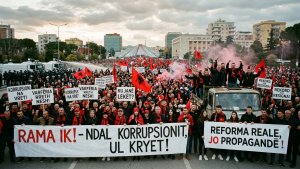
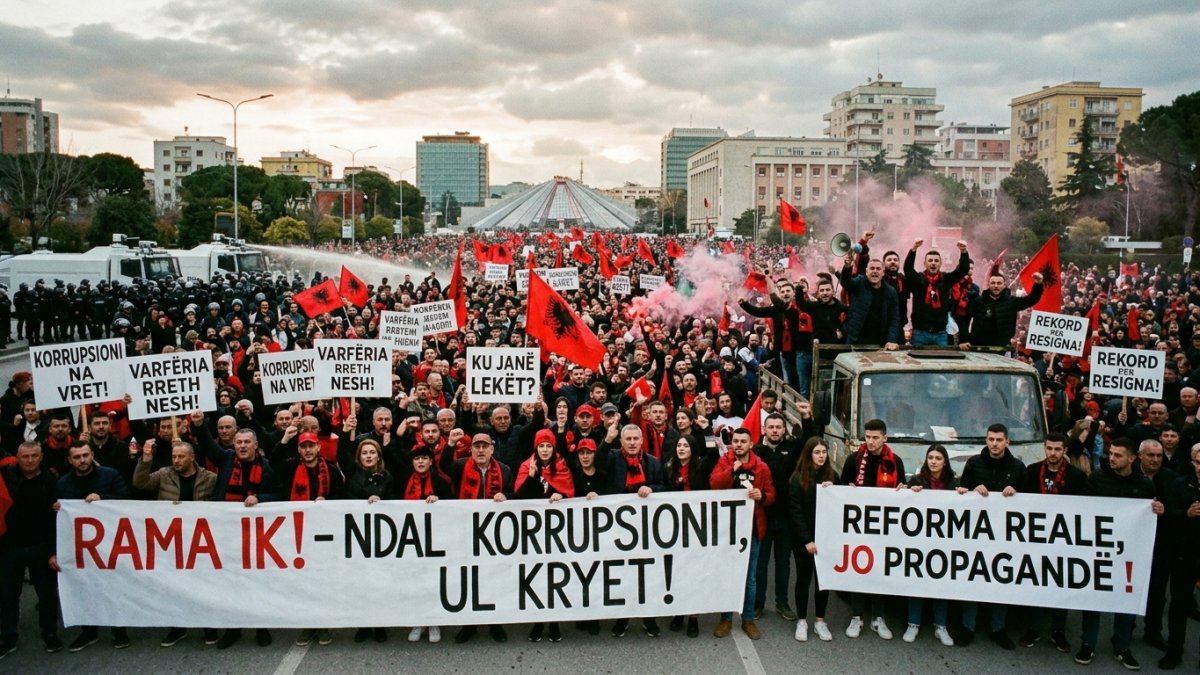
Protests in Albania have widened from specific civic and student concerns into a broader movement challenging Prime Minister Edi Rama’s government.
Demonstrators have cited high living costs, allegations of corruption, weak public services and limited opportunities. Students have also raised concerns about education costs and conditions at universities. The grievances have drawn high school and university students into demonstrations alongside other members of the public.
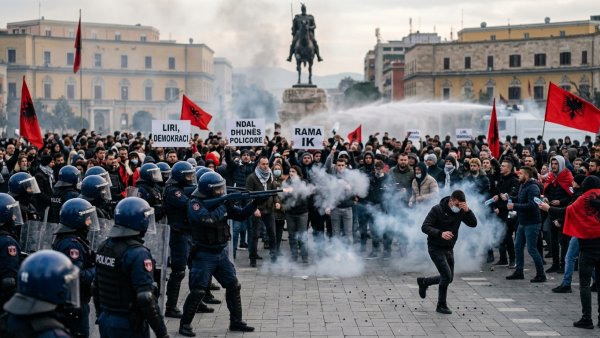
The protests have included clashes with police in Tirana. Demonstrators say they intend to continue or intensify their actions, while Rama has rejected calls to resign.
The movement’s development reflects a convergence of concerns rather than a single demand. Student complaints about education and employment prospects have joined wider public frustration about prices, governance and services. Earlier civic activism focused on environmental concerns and development plans, before the demonstrations broadened.
The government has faced pressure to address the complaints while maintaining public order. Protesters argue that the issues affecting daily life require political change; the prime minister has resisted the demand to step aside.
The coming days will test whether the demonstrations remain centred on student and cost-of-living grievances or develop into a wider challenge to the government. For now, protesters say they plan to stay mobilised, while Rama continues to deny that resignation is necessary.