
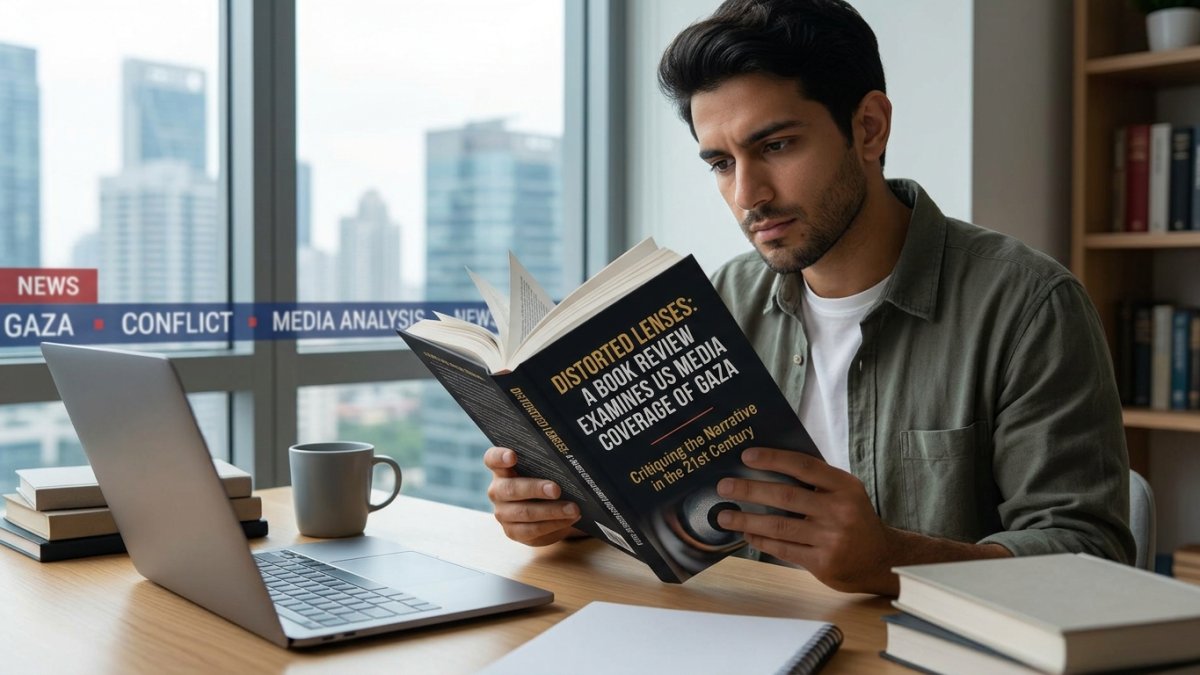
A new book review examines Adam H. Johnson’s argument that major US media coverage helped shape how audiences understood Israel’s war on Gaza.
In “How to Sell a Genocide: The Media’s Complicity in the Destruction of Gaza”, Johnson focuses on coverage by prominent liberal and mainstream outlets. His research draws on more than 12,000 articles, thousands of television segments and interviews with journalists, according to the review.
The book argues that some coverage gave greater prominence to Israeli accounts, repeated claims before they were fully verified and often provided limited historical context for the October 7, 2023 attacks and the subsequent war. Johnson also examines how language used to describe violence and victims differed across coverage.
The review highlights the book’s comparisons of reporting on Palestinian and Israeli deaths, claims about sexual violence and the use of terms such as “human shields”. Johnson presents these patterns as evidence of unequal standards and a media framing that, he argues, made mass civilian suffering easier for some audiences to accept.
The book’s conclusions are the author’s analysis, and the review notes that its prosecution-style approach relies heavily on data and comparisons. Its central question is how newsroom decisions, sourcing rules and political assumptions affect the public record during war.
The review argues that examining media coverage matters because reporting influences how the public interprets responsibility, civilian harm and the options available for political action. Johnson’s work calls on editors and journalists to explain the choices behind their coverage.