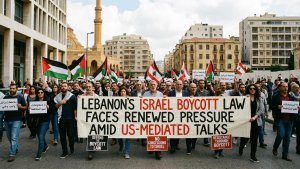

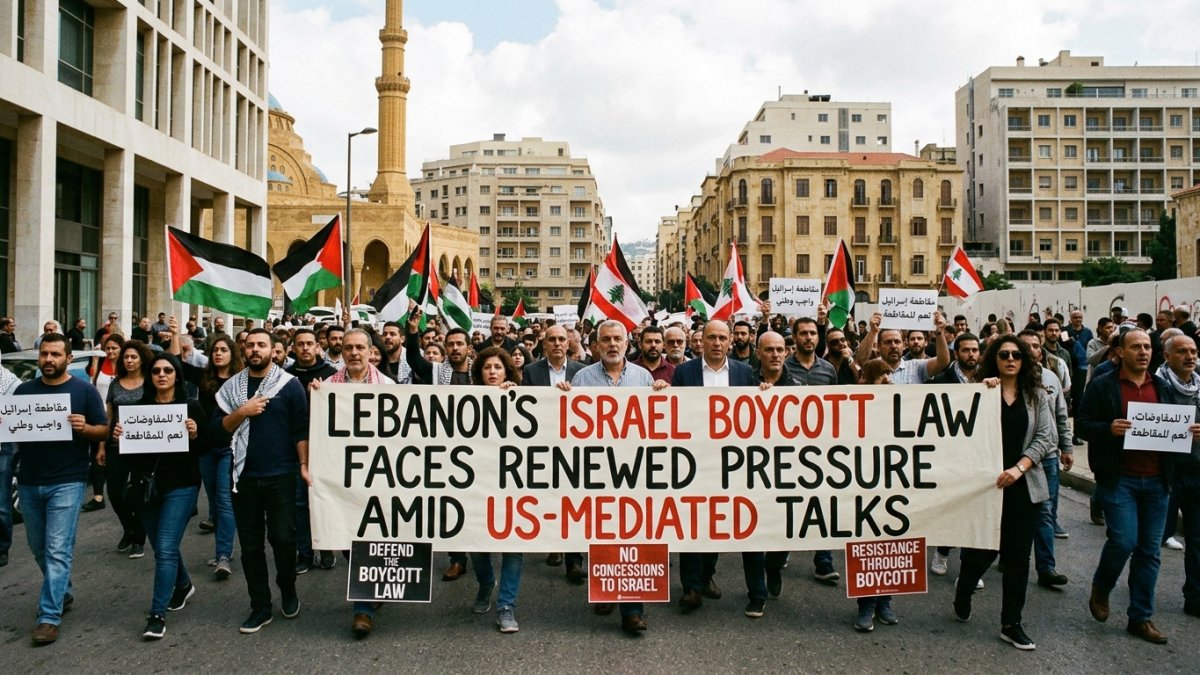
Lebanon’s law criminalising contact with Israelis is facing renewed pressure as the country participates in US-mediated military discussions with Israel.
The 1955 law provides penalties of three to 10 years of hard labour for prohibited contact. The debate intensified after a Lebanese lawyer filed a complaint concerning a reported phone call between Lebanon’s ambassador to Washington and Israel’s ambassador. The Lebanese president has denied that the reported contact took place.
A judicial official reportedly dismissed the complaint, interpreting the law as applying to commercial transactions rather than the alleged diplomatic contact. The lawyer who filed it has challenged that interpretation, arguing that the law and past court practice cover a wider range of dealings.
US officials have urged Lebanon to suspend or repeal the law, arguing that it complicates negotiations. Support for changing it inside Lebanon remains limited, with political groups wary of opening a divisive debate while Israeli military operations continue.
Lebanese and Israeli military delegations began US-mediated talks at CENTCOM headquarters in Tampa on October 20. The discussions are focused on security and implementation of an existing framework agreement, rather than a general peace negotiation. Beirut has said its delegation wants an end to Israeli attacks and progress on withdrawal arrangements.
The dispute over the boycott law highlights the tension between formal security talks and Lebanon’s domestic legal and political constraints. Any change to the law would require a broader political debate in a country where views on direct engagement with Israel remain sharply divided.