
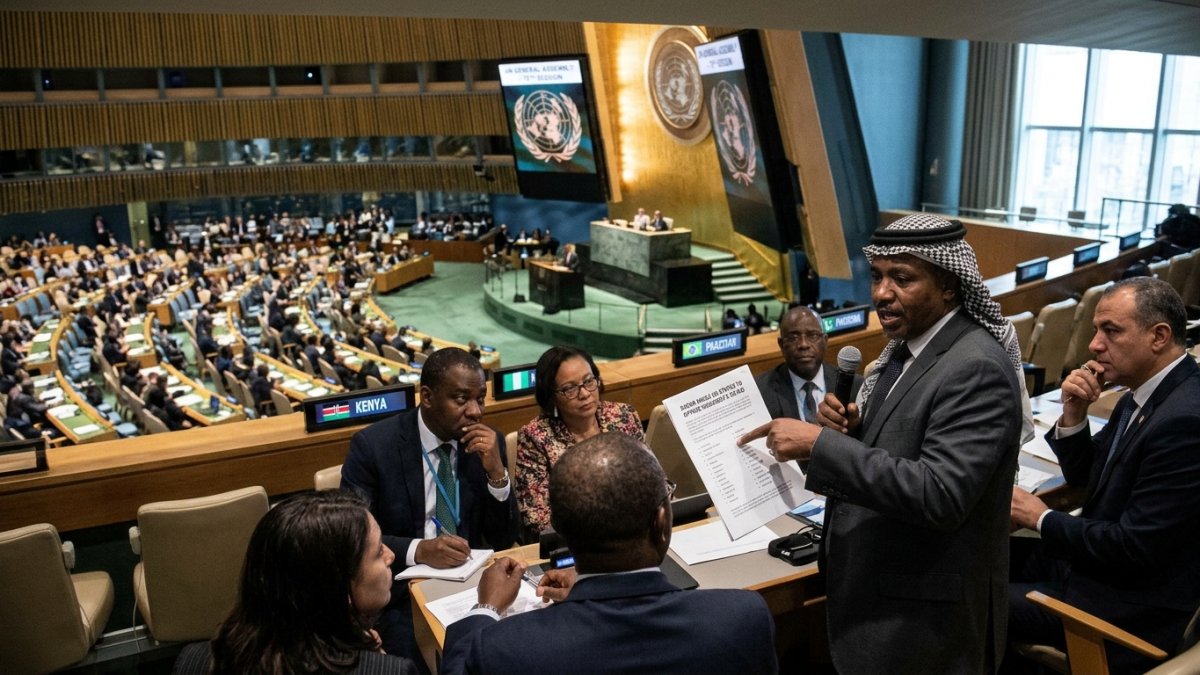
Sudan’s permanent mission to the United Nations has urged member states to oppose the candidacy of Emirati diplomat Lana Nusseibeh for secretary-general. The mission argues that her record on Sudan’s civil war raises questions about her independence and impartiality.
The dispute centers on allegations that the United Arab Emirates has supported the Rapid Support Forces (RSF), which is fighting Sudan’s army. The UAE denies backing the paramilitary group. Nusseibeh, who served as her country’s ambassador to the UN from 2013 to 2024, has also rejected claims of Emirati involvement, calling them unfounded in public statements.
Sudan’s mission says Nusseibeh’s denials of the allegations undermine confidence that she could address the conflict impartially if appointed. The secretary-general is required under the UN Charter to act independently of national governments. Sudan’s criticism is a diplomatic position; it is not an independent finding about Nusseibeh or the UAE.
Sudan filed a case against the UAE at the International Court of Justice in 2025, alleging complicity in genocide through support for the RSF. In May, the court dismissed the case for lack of jurisdiction because of the UAE’s reservation to the Genocide Convention’s jurisdiction clause. The court did not examine the substance of Sudan’s allegations or rule on whether the UAE supported the RSF.
The UN secretary-general is appointed by the General Assembly following a recommendation from the Security Council. Sudan’s appeal is part of a contested selection process, and the final decision rests with UN member states.